Welcome to my space, this is
Arshnoor Kaur


About Me
Fullname:
Arshnoor Kaur
Birthdate:
May 16th, 2004
Email:
kaura69@mcmaster.caI’m passionate about software development and creating innovative solutions that enhance user experiences. With experience in web development, cloud computing, and database management, I’m always looking to expand my skills and contribute to impactful projects. As the VP External of McMaster Start Coding, I play a key role in promoting the club's initiatives and fostering partnerships with external organizations to create new opportunities for our members. I thrive in team environments and enjoy tackling complex challenges that push me to think creatively.




McMaster University
Bachelors of Applied Sciences in Computer Science
Expected graduation (2027)
Currently enrolled in the 3rd year of Honours of Computer Science Co-op program at McMaster University, eligible for a 4 - 16 month co-op starting in May 2025. Experience with cloud native applications with exposure to private, public and hybrid cloud models and cloud native core principles
Gyan Bharati School
High School Degree
(2019-2022)

Experience

Outreach Instructor (Co-op) - Fondation STaBL Foundation
- Developed and Enhanced Educational Software Systems: Designed and improved interactive tools using Elm, leveraging functional programming to achieve a 40% increase in system efficiency and reliability while ensuring exceptional user experience.
- Facilitated Agile Processes: Conducted detailed code reviews and actively participated in Agile methodologies, such as sprint planning, daily stand-ups, and retrospectives, ensuring effective communication and teamwork across diverse groups.
- Streamlined Version Control Processes: Led initiatives to enhance version control systems, optimizing workflow accuracy and efficiency, and fostering seamless collaboration within cross-functional teams.
- Created Engaging Educational Tools: Designed and delivered interactive educational applications for K-12 students, transforming complex programming and mathematical concepts into intuitive and accessible tools, highlighting strong content creation and presentation skills.
- Delivered Educational Workshops: Presented technical workshops and programs to over 2,000 K-12 students globally, showcasing excellent verbal and written communication skills, audience engagement, and adaptability to diverse learner needs.
- Collaborated Across Teams: Worked closely with developers, educators, and management to identify and resolve technical challenges, align project goals, and drive initiatives that improved stakeholder satisfaction and team productivity.
- Managed Projects with Precision: Organized and coordinated multiple concurrent projects, maintaining attention to detail, meeting tight deadlines, and adapting to evolving priorities in a fast-paced environment.
- Strengthened Stakeholder Relationships: Maintained effective communication with stakeholders, incorporating feedback to align software development with organizational objectives, emphasizing interpersonal and relationship-building skills.
Software Developer - Fondation STaBL Foundation
- Refined Version Control Processes: Improved the efficiency and reliability of existing software systems using the Elm Framework.
- Developed and Tested Prototypes: Ensured the successful implementation of improvements in software systems.
- Enhanced Software System Efficiency: Focused on optimizing the software and improving the overall user experience.

Vice President External - McMaster Start Coding
- Community Engagement: Represent McMaster Start Coding at external events, workshops, and conferences, fostering relationships with educational institutions, industry professionals, and community partners.
- Partnership Development: Identify and establish partnerships with organizations that align with the club's mission, securing sponsorships, resources, and opportunities for members.
- Event Coordination: Collaborate with the internal team to organize outreach events, ensuring seamless communication and participation from external stakeholders.
- Promotion and Advocacy: Act as a spokesperson for the club's initiatives, advocating for computer science education and encouraging community involvement.
- Strategic Planning: Work with the executive team to align external engagement strategies with the club's long-term goals, contributing to growth and impact.
- Reporting: Provide regular updates to the executive team on external activities, partnerships, and opportunities for further development.
Projects
2024
2024
CareFinder: Mapping Canadian Healthcare Facilities
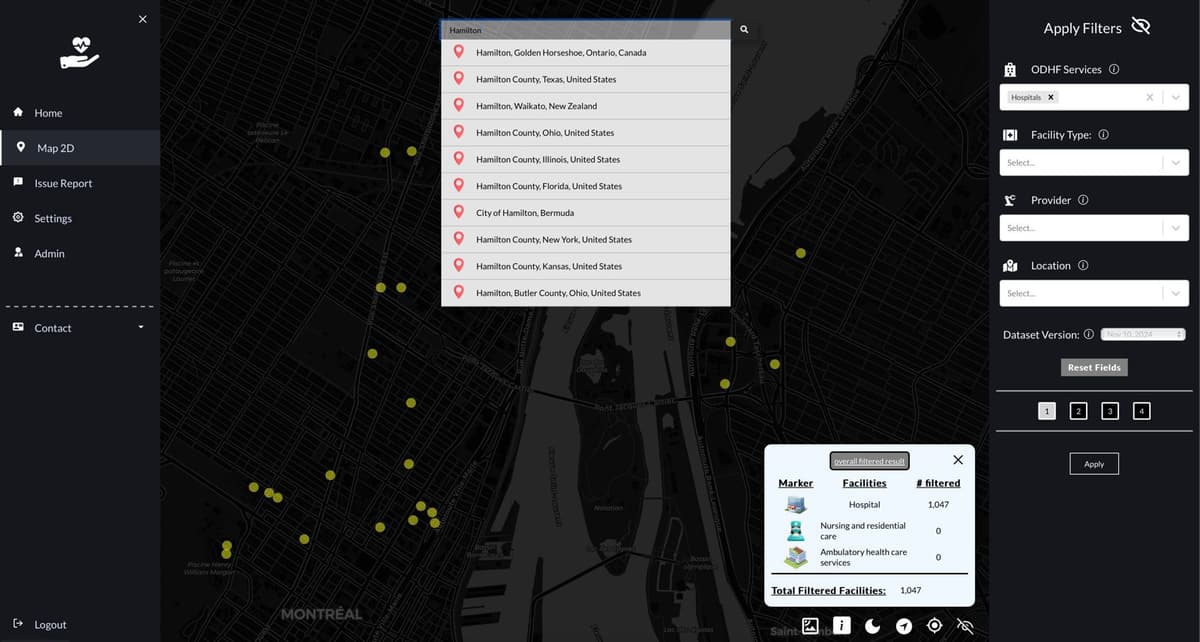
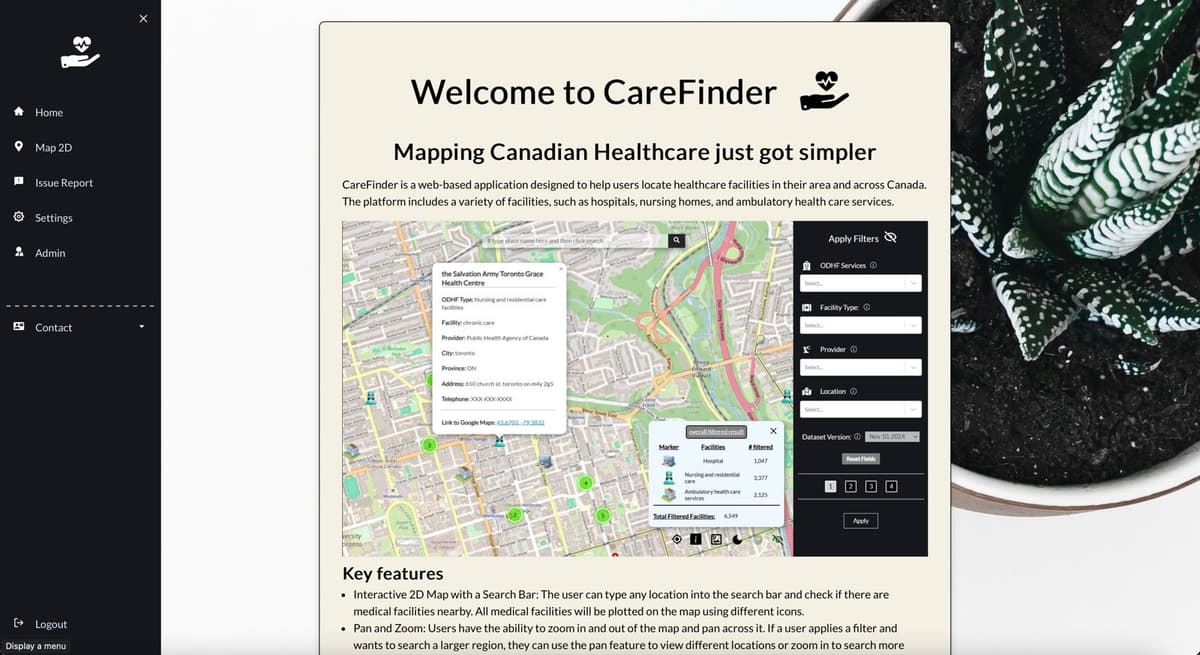
CareFinder is a web-based application designed to help users locate healthcare facilities in their area and across Canada. The platform includes a variety of facilities, such as hospitals, nursing homes, and ambulatory health care services.
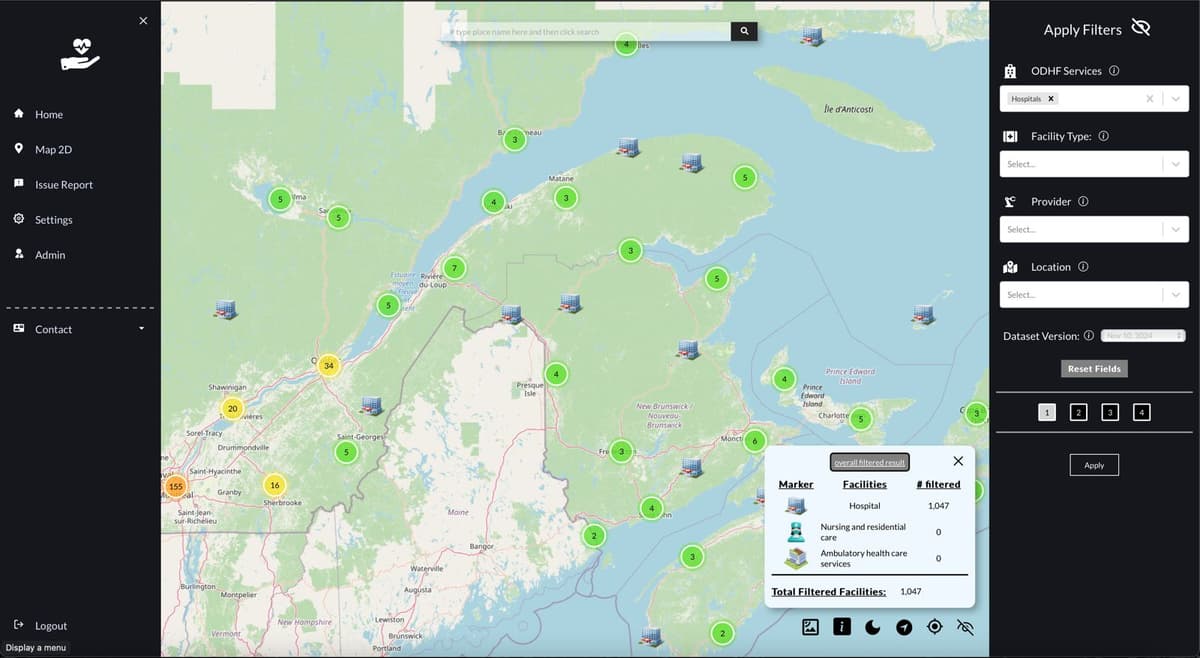
- Interactive 2D Map with a Search Bar: The user can type any location into the search bar and check if there are medical facilities nearby. All medical facilities will be plotted on the map using different icons.
- Pan and Zoom: Users have the ability to zoom in and out of the map and pan across it. If a user applies a filter and wants to search a larger region, they can use the pan feature to view different locations or zoom in to search more deeply in a specific area.
- Filtering Options: To see everything, simply click 'Apply.' Users also have the ability to easily filter facilities across Canada by location, type of facility, and services offered. The results will be detailed, showing the number of facilities. The results can also be customized by the user.
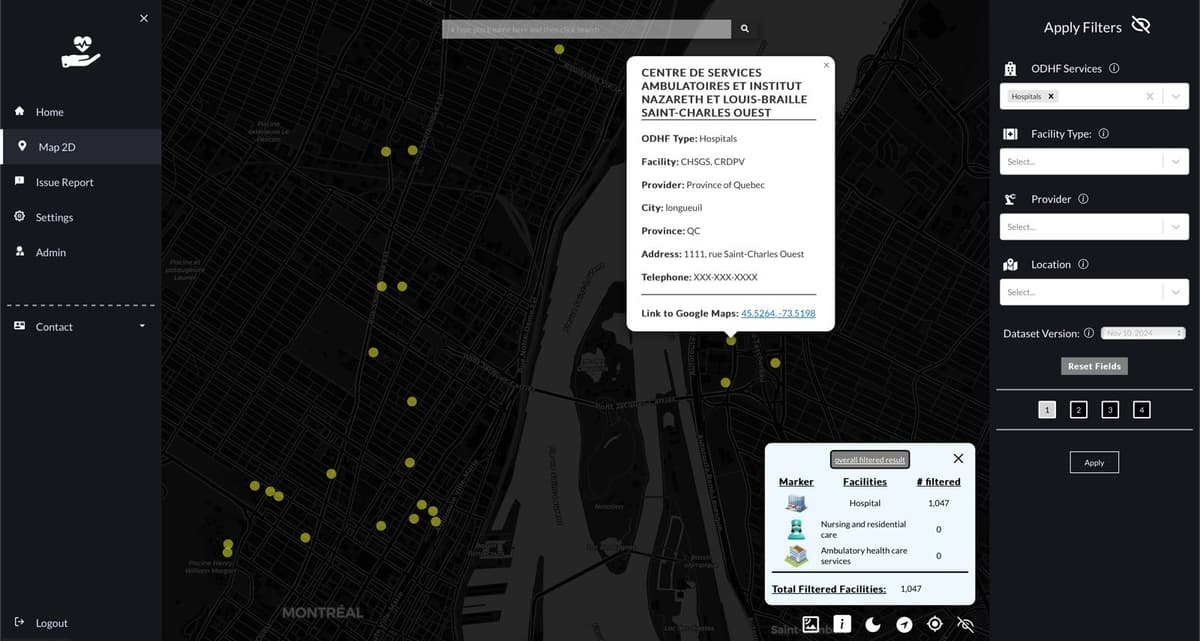
- Detailed Facility Information: Each healthcare facility entry includes specialization areas, available services, address, and contact information.
- Dark Mode: Shows the high-level distribution of filtered healthcare facilities across Canada and gives the user a general view of how the facilities are distributed.
Early 2024
Early 2024
Algorithm Analysis
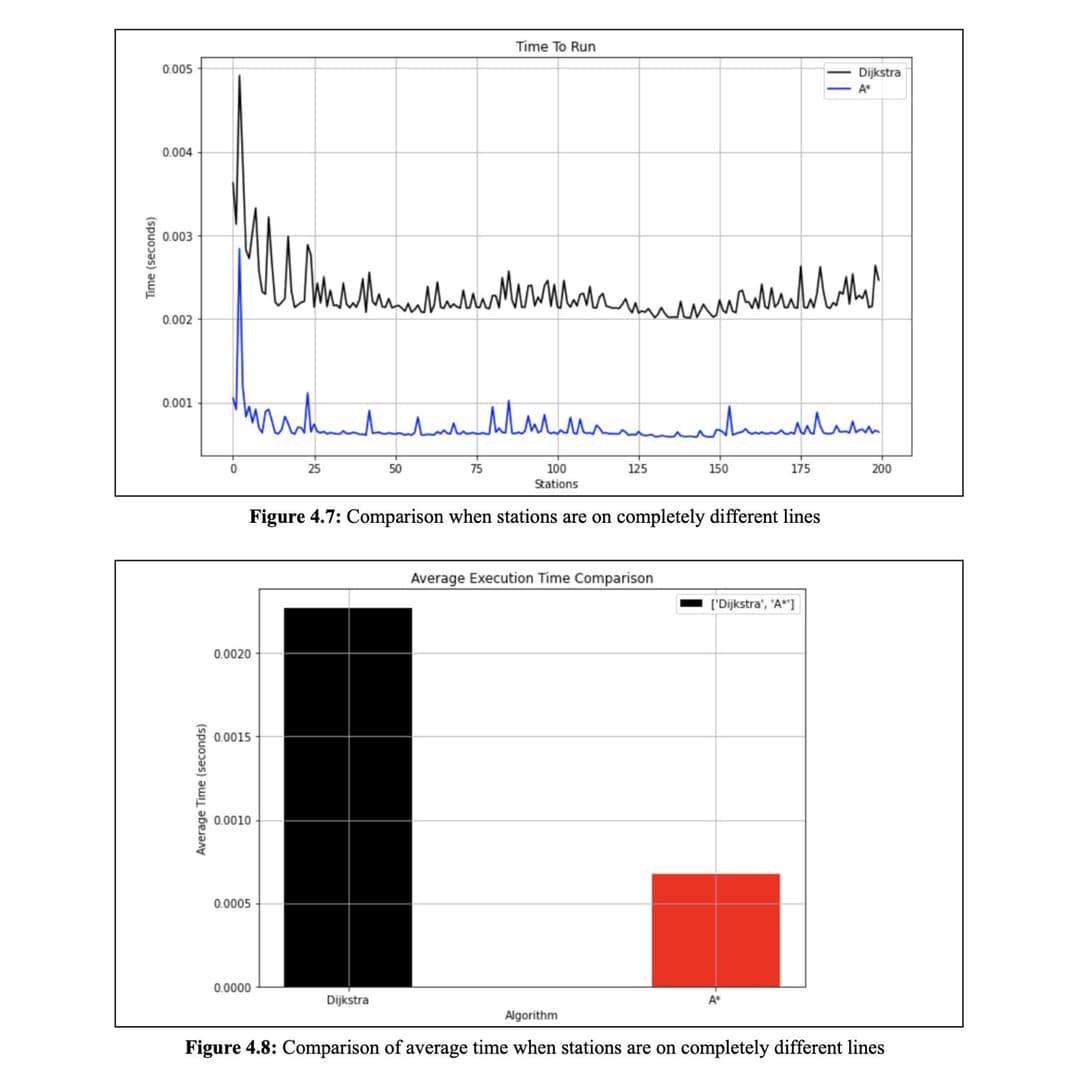
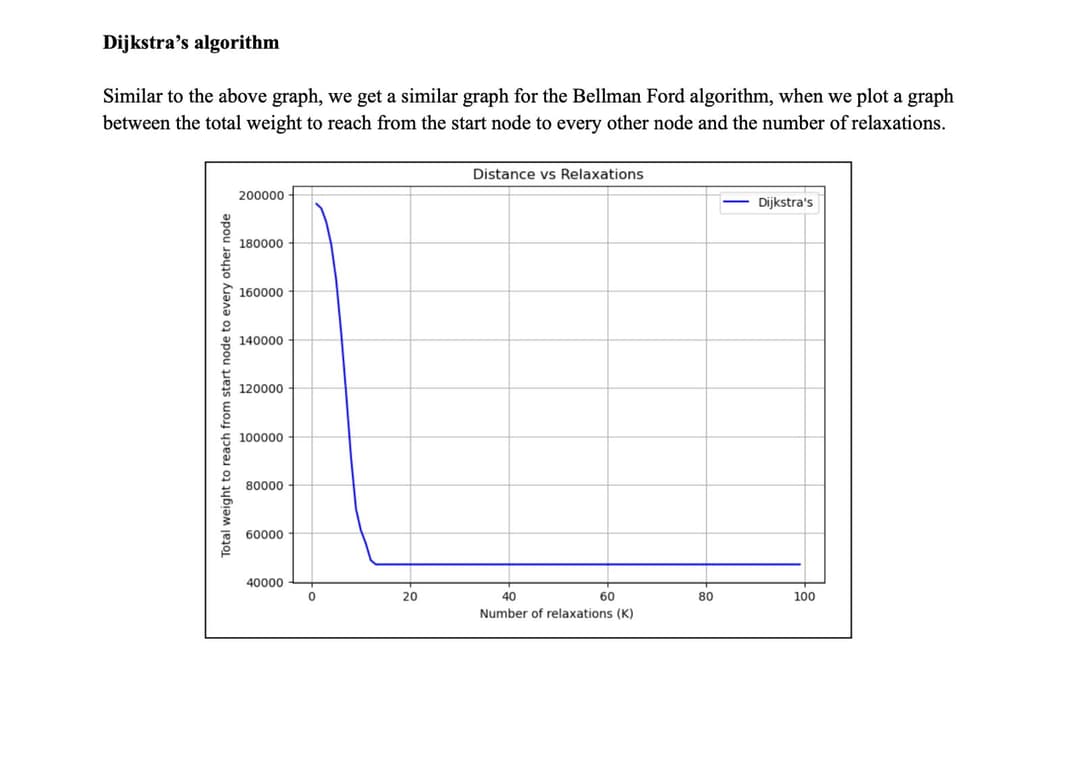
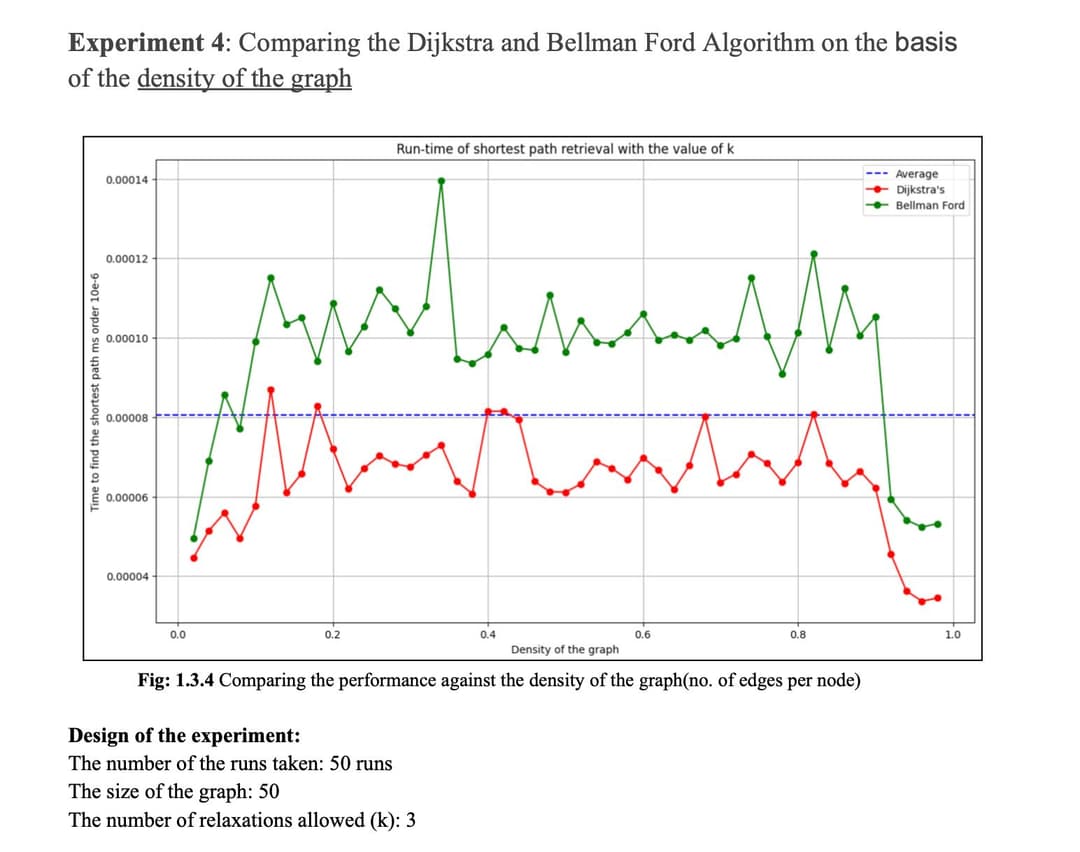
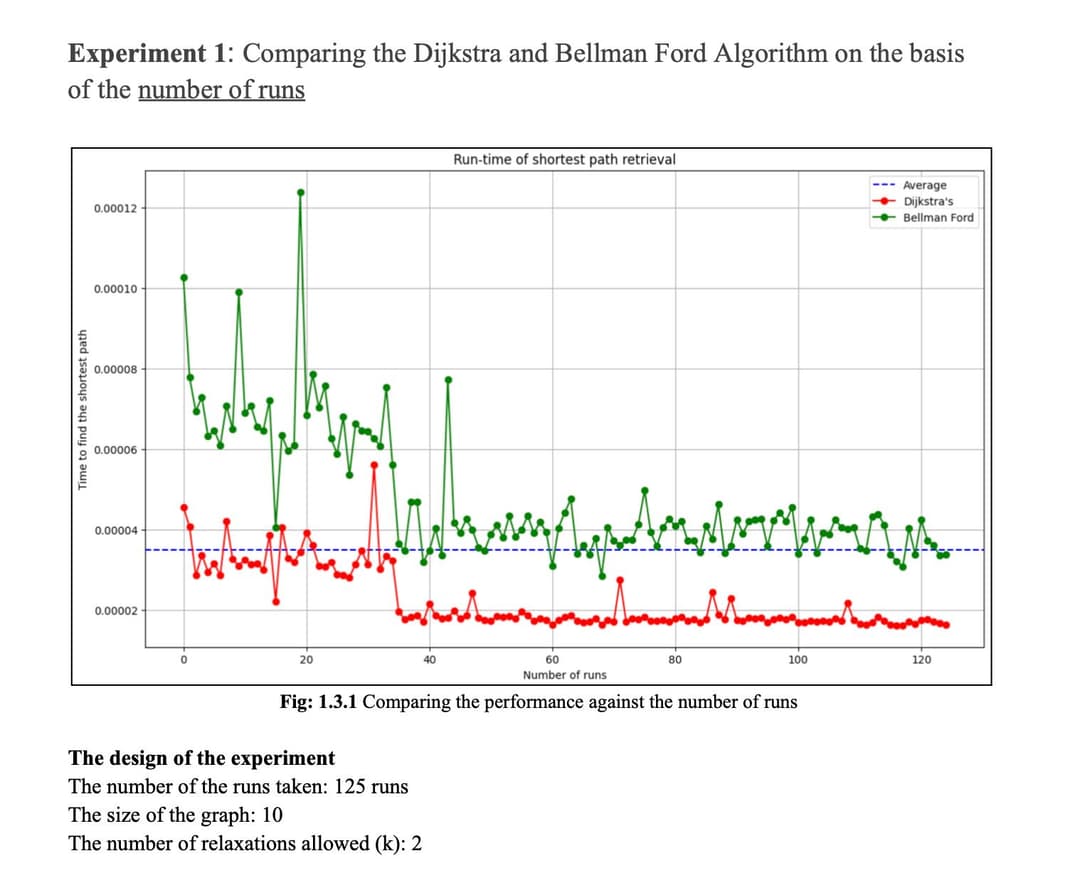
This project explores and compares different shortest path algorithms, focusing on Dijkstra’s and Bellman-Ford algorithms, and investigates the A* algorithm as a more advanced alternative. Our goal is to implement these algorithms and analyze their performance in various scenarios to gain insights into their efficiency and practical applications. We aim to understand the trade-offs between different algorithms and determine which is best suited for specific types of problems.
Skills and coursework
Operating Systems
Explored processes and threads, including their management and lifecycle. Studied synchronization techniques and inter-process communication. Learned about scheduling algorithms and memory management strategies.Covered file system structures, resource protection, and security mechanisms. Analyzed the architecture and design of operating systems.
Data Structures and Algorithms
Covered fundamental data structures such as stacks, queues, hash tables, binary trees, and graphs. Explored key algorithms for searching, sorting, and graph traversal, including minimum spanning trees, shortest path algorithms, and tree operations. Gained hands-on experience with algorithmic design strategies, performance analysis, and correctness proofs. Focused on evaluating the time complexity of algorithms (best, average, and worst-case) and understanding the trade-offs between time and space complexity. Developed the ability to select and justify appropriate data structures and algorithms to solve various computational problems effectively.
Computer Architecture
Developed a comprehensive understanding of foundational concepts, including digital logic computation, number representations (integer and floating-point), instruction set architecture (ISA), and the interaction between processors, memory, and I/O. Gained hands-on experience programming in ARM assembly and integrating assembly with C for practical tasks. Explored advanced topics such as CPU pipelining, parallelism, virtual memory, caching, and I/O systems. Acquired skills in evaluating and reasoning about ISA design and performance, memory hierarchies, and architecture choices while mastering the ability to analyze and convert between various number representation standards.
Human Computer Interfaces
Focused on the design and evaluation of user interfaces, emphasizing principles of effective and intuitive interface design. Explored task-oriented and user experience design methodologies to create functional and user-centered solutions. Addressed inclusive design principles to ensure accessibility for diverse user groups. Studied human cognition, including memory, perception, and motor systems, to align interfaces with human capabilities. Examined graphical communication techniques and addressed challenges like mode awareness. Gained hands-on experience with interface design tools and strategies for developing help systems to enhance user support and engagement.
Software Development
Explored software process models and activities essential to software development, including requirement engineering for discovering and documenting requirements. Studied software design principles and graphical modeling techniques using Unified Modeling Language (UML). Gained expertise in interface specification, mathematical notations, and programming paradigms such as object-oriented and functional programming. Applied design patterns, conducted software verification and validation, and understood test-driven development methodologies. Examined the software evolution process, maintenance practices, and the role of software engineers in modern development workflows. Acquired hands-on experience in Java programming and designing robust, scalable systems.
Statistics and Probability
Studied fundamental concepts of probability and statistics, including combinatorics, independence, and conditional probability. Explored discrete and continuous distributions, statistical applications, and the Poisson process. Developed an understanding of expectation, transformations, moment-generating functions, and their applications. Analyzed joint, marginal, and conditional distributions, as well as covariance and correlation. Examined the central limit theorem and its significance in statistical inference and data analysis.